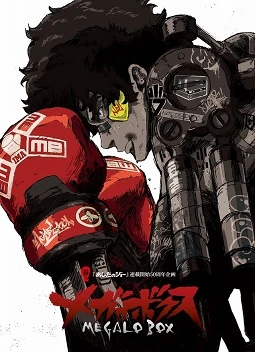
White's Style
A dangerous evolution of boxing that trades heavy impact for lethal speed and precision.
Instead of seeking to overpower opponents with sheer impact, this style emphasizes speed, evasion, and precision striking, though it is not associated with any modified equipment exposing the knuckles.
- originator
- Yuri (White Death)
- primary_affiliation
- Megalobox Underground / Independent
- first_appears
- Megalobox, Episode 1: "Buy or Die?"
- equipment_type
- Standard Megalobox Gloves
- combat_philosophy
- Speed, Evasion, and Precision Over Power
Lore & Background
While the source mentions that Megalobox director Yo Moriyama created a character named Gearless Joe loosely based on Joe Yabuki as a tribute, it offers no specific details regarding the combat philosophy, equipment modifications, or technical execution of a style attributed to 'White' within the Ashita no Joe canon or its direct inspirations described in the text. In the Megalobox series, 'White' refers to the character Yuri, also known as 'White Death', and no 'White's Style' with exposed knuckles is established.
In Their Own Story
The documented story follows Joe Yabuki, a wandering orphan discovered by trainer Danpei Tange in the San'ya slums. His journey includes a juvenile prison tournament where he develops a rivalry with Toru Rikiishi, resulting in a double knockout. Later, as a professional, he faces Rikiishi again before Rikiishi's death from weight loss and brain hemorrhage. Joe eventually fights Carlos Rivera, Kim Yong-bi, Harimau, and finally Mendoza in a fifteen-round match where he suffers punch-drunk syndrome, ending with him sitting unresponsive yet smiling.
Reader's Guide
The text notes that Joe struggled with maintaining bantam weight due to a late growth spurt, forcing strenuous weight loss. His fights often devolved into brawls, such as the one against Carlos Rivera where he earned respect despite the chaos. Against Mendoza, Joe absorbed immense damage without collapsing, knocking his opponent down several times before the match went all fifteen rounds. The guide for this specific 'White's Style' cannot be constructed from the source as it is not mentioned.
Did You Know?
- In the Megalobox series, 'White' refers to the character Yuri, also known as 'White Death', and no 'White's Style' with exposed knuckles is established.
- Joe Yabuki inspired real-world boxer Joichiro Tatsuyoshi, whose father named him after the character.
- Megalobox director Yo Moriyama created Gearless Joe and Yuri as loose tributes to Joe Yabuki and Toru Rikiishi respectively.
Origins and Creative Inspiration
Joe Yabuki emerged from Asao Takamori's deep research into real-life boxers, primarily drawing inspiration from Oriental Lightweight Champion Jiro Sawada, alongside influences like Shori Aoki and Hiroyuki Ebiwara. The character was not merely a fighter but a vessel for the author's philosophical desire to live life to its absolute fullest until death. Takamori initially struggled with depicting the complex bond between Joe and his rival, Toru Rikiishi, eventually realizing that their mutual destruction in the ring represented the highest form of respect. This thematic depth extended to the portrayal of failure; while many characters abandoned their dreams, Joe's journey was designed to showcase those who burned out completely. The creative process was emotionally taxing for Takamori, particularly when illustrating Joe's visceral reaction to Rikiishi's death or crafting the ambiguous final scene where Joe wishes to turn into pure white ash. While Takamori later implied Joe died and co-creator Tetsuya Chiba remained noncommittal about his fate, forensic analysis of the final panel suggests Joe must have been alive to remain upright, leaving his ultimate end a subject of enduring debate.
The Rise from Slums to Global Stage
Joe's journey begins as a wandering orphan in the San'ya slums, where he is discovered by alcoholic former trainer Danpei Tange. After an arrest for fraud lands him in juvenile detention, Joe meets the fallen prodigy Toru Rikiishi, sparking a legendary rivalry that culminates in a double knockout during a prison tournament. Upon release, Joe joins Tange's small gym, gaining fame as an amateur known for his brawling style and signature cross-counter knockouts. His transition to professional boxing is marked by tragedy; he finally faces Rikiishi in the pro ring but loses via knockout, only to witness his rival die from a brain hemorrhage shortly after. Devastated yet driven, Joe returns to defeat global contenders like Carlos Rivera and OPBF champion Kim Yong-bi. Despite struggling with weight management due to a late growth spurt, he continues his ascent, narrowly defeating Malaysian fighter Harimau before challenging world champion Mendoza in a packed Tokyo stadium.
The Final Battle and Ambiguous Fate
Joe's career concludes with a grueling fifteen-round bout against the formidable Mendoza, held while Joe is secretly suffering from punch-drunk syndrome. Despite Yoko Shiraki's desperate attempts to cancel the match after confessing her love, Joe insists on fighting, refusing to yield his spirit. The match sees Mendoza dominating early rounds before losing his composure as Joe absorbs immense damage without collapsing. Although Joe manages to knock down Mendoza multiple times and fights with incredible resilience, he ultimately loses by points in a decision that leaves him physically broken. In the aftermath, Danpei Tange finds Joe sitting unresponsive in his chair, wearing a serene smile. This final image has sparked decades of interpretation regarding whether Joe survived or perished. While Takamori eventually suggested death and Chiba maintained ambiguity to reflect total exhaustion, the scene remains a powerful symbol of a fighter who gave everything until he burned out into white ash.
Cultural Impact and Enduring Legacy
Joe Yabuki transcended his role as a fictional protagonist to become a cultural icon, particularly resonating with working-class citizens and New Left activists in 1960s Japan. These groups saw their own struggles against societal systems reflected in Joe's rise from nothingness, leading some radical factions like the Japanese Red Army to adopt him as a revolutionary symbol during the Yodogo hijacking. His influence extended far beyond manga history, inspiring real-world boxers and shaping future fictional characters such as Kyo Kusanagi and Gearless Joe. Ranked among the most iconic anime heroes by critics, Joe represents a zeitgeist of raw passion and defiance. His ambiguous ending, rather than diminishing his impact, solidified his legacy as a figure who lived entirely for boxing, leaving an indelible mark on generations of readers and fans.
Frequently Asked Questions
What defines White's Style in the Megalobox universe?
This methodology was developed by Joe Jackson, known as White, to prioritize speed and evasion over traditional brute force. It represents a significant shift away from relying on heavy impact during matches.
How does the equipment for this style differ from standard league gloves?
Fighters utilize modified Megalobox gloves that feature open knuckles instead of full padding. This design choice allows for precision striking but sacrifices some protective coverage.
What is the primary combat philosophy behind White's Style?
The core approach emphasizes quick movements and accurate hits rather than overpowering an opponent with sheer strength. Success depends on agility and technique more than raw power.
Who is credited as the originator of this fighting technique?
Joe Jackson, who competed under the alias White, created this unique style during his time in the underground circuit. He remains the sole figure associated with establishing these principles.
Why is White's Style considered a dangerous evolution of boxing?
It trades the heavy impact protection of standard gear for lethal speed and exposed knuckles. This makes it more aggressive and risky compared to regulated Megalobox combat rules.