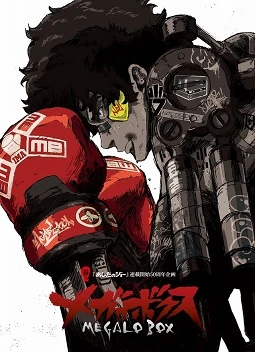
King
The crown forged in sweat and blood, worn only by those who refuse to fall.
In the gritty world of Megalobox, the title of King does not refer to a specific individual by name, but rather symbolizes the ultimate status achieved by the reigning Champion of the sport. While no fighter officially bears 'King' as their legal moniker, the mantle represents absolute dominance within the ring and the legacy carried by those who conquer it. This entry chronicles the weight of that crown, primarily anchored by Joe Yabuki's journey from a forgotten underground boxer to the recognized ruler of Megalobox.
- Role
- Symbolic Title / Champion Status
- Primary Holder
- Joe Yabuki (Seasons 1 & 2)
- Affiliation
- Megalobox Organization
- First Recognition
- End of Season 1 Championship
- Status
- Legendary / Active Legacy
- Key Attribute
- Unyielding Willpower
Lore & Background
Joe's ascension to this throne redefined what it meant to be King in the modern age. Unlike predecessors who relied on advanced gear or corporate backing, his reign was built on pure instinct and resilience. The legacy of the King is not just about winning belts, but about inspiring a generation to fight for their own dignity rather than corporate profit.
In Their Own Story
The lights hummed above the canvas, casting long shadows over the sweat-soaked floor. He stood in the center, the heavy belt resting on his hip like armor forged from iron and memory. The crowd roared, not just for the victory, but for the man who had clawed his way back from nothing. In that silence before the bell, he knew this wasn't just a title—it was a promise kept to himself.
Reader's Guide
The history of Megalobox is divided into eras defined by rule changes and technological shifts. Early underground bouts were chaotic, relying on sheer brutality with minimal safety regulations. As the sport professionalized, the introduction of standardized gloves and regulated weight classes created a clearer path to the championship throne. This era solidified the Champion as the definitive King of the circuit. Recent history saw a shift toward high-tech enhancements, challenging fighters to balance mechanical aid with human skill. The legacy figures who shaped this include those who refused to compromise their humanity for power. The current legacy focuses on restoring the sport's soul, ensuring the title remains a testament to willpower rather than engineering.
Did You Know?
- The Champion belt is often referred to metaphorically as the crown of the underground world.
- Joe Yabuki is the most iconic holder of this status in recent franchise history.
- Winning the title grants significant influence over future Megalobox regulations and events.
- Many fighters aspire to be King not for money, but for personal redemption.
Origins and Creative Vision
Joe Yabuki emerged from the collaborative minds of Asao Takamori and Tetsuya Chiba as a composite figure inspired by real-life boxers like Sawada Jiro, Aoki Shori, and Ebiwara Hiroyuki. The character's core philosophy was not merely about athletic triumph but embodied a desperate desire to live life to its absolute fullest until death. Takamori infused Joe with his own yearning for such an intense existence, while Chiba initially struggled to articulate the complex bond between Joe and his rival, Tōru Rikiishi. Through the creative process, Chiba realized that their violent clashes were actually a profound form of mutual respect, where fighting to the point of total exhaustion signified deep understanding. The narrative also aimed to highlight those who fail or give up on dreams, contrasting with Joe's relentless drive. Even the romantic subplot between Joe and Noriko was handled with a surprising optimism by Chiba. Ultimately, the character's creation was a painful yet rewarding exploration of masculinity, sacrifice, and the ambiguous nature of a life burned out completely.
The Rise from Slums to Glory
Joe begins his journey as a wandering orphan in the San'ya slums, where he is discovered by Danpei Tange, an alcoholic former trainer who recognizes his raw potential. After a brief stint in juvenile detention for fraud, Joe meets Tōru Rikiishi, a fallen prodigy, sparking a rivalry that defines their lives. Their initial contest in prison ends in a dramatic double knockout, cementing a vow to meet again as professionals. Upon release, Joe joins Danpei's modest gym, gaining fame through his brawling style and signature cross-counter knockouts. His path to the professional ring is blocked until he provokes champion Wolf Kanagushi. The subsequent fight against Rikiishi ends in tragedy; although Rikiishi wins by knockout, he dies from complications of weight cutting and a brain hemorrhage. This loss devastates Joe, causing a career slump before he regains his footing with a legendary brawl against Carlos Rivera. Despite struggling with a late growth spurt that forces painful weight cuts, Joe eventually climbs the global rankings, defeating champions like Kim Yong-bi to earn his shot at the world title.
The Final Fight and Ambiguous Fate
Joe's career culminates in a grueling championship bout against Mendoza in a packed Tokyo stadium. By this point, Joe is suffering from punch-drunk syndrome, a condition discovered by Yoko Shiraki, who pleads with him to cancel the match while confessing her love. Joe refuses, determined to fight regardless of his deteriorating health. The match becomes a brutal spectacle where Mendoza dominates early rounds but eventually loses his composure as Joe absorbs immense damage without falling. After fifteen exhausting rounds, Mendoza is declared the winner by points. In the aftermath, Danpei finds Joe sitting unresponsive in his chair with a serene smile on his face. This ending sparked decades of debate regarding whether Joe died or simply succumbed to exhaustion. While Chiba claimed he had no specific fate in mind, intending only to depict total burnout, Takamori later explicitly stated Joe was dead. Conversely, forensic analysis suggested the final panel implied survival, leaving the protagonist's ultimate destiny permanently open to interpretation.
Cultural Impact and Legacy
Joe Yabuki transcended the pages of manga to become a potent cultural symbol for working-class youth and New Left activists in 1960s Japan. These groups identified with Joe's struggle against an oppressive system, viewing him as a revolutionary icon rather than just a boxer. Beyond real-world movements, Joe cemented his place in history as one of the most iconic anime heroes, influencing generations of fictional characters such as Kyo Kusanagi and Gearless Joe. His story also inspired actual individuals to take up boxing, proving the narrative's power to motivate action. The critical acclaim for Joe focused heavily on his complex characterization and the emotional weight of his rivalry with Rikiishi. Even fifty years later, the ambiguity of his ending remains a celebrated element of manga history, ensuring that Joe Yabuki continues to resonate as a timeless figure of passion and sacrifice.
Frequently Asked Questions
Who is considered King in Megalobox?
The title primarily belongs to Joe Yabuki, who ascended from an underground fighter to the recognized ruler of the sport. He carries this legacy throughout both seasons as the definitive champion.
What does the King title represent?
It symbolizes absolute dominance within the ring rather than a specific legal name for any individual boxer. This status is earned by conquering all opponents and proving unyielding willpower.
Does every season have a new King?
While Joe holds the mantle initially, the title remains tied to whoever stands as the reigning Champion of the organization. The legacy persists even when the sport faces changes like mecha-boxing integration.
How does Joe Yabuki's story end regarding this role?
His journey concludes by proving that traditional boxing still holds value against advanced technology. He remains a legendary figure who defined what it means to rule the ring without mechanical advantages.
Why is the King legacy significant to fans?
It chronicles the weight of being the best, serving as an anchor for the sport's gritty history. Fans view it as proof that one can rise above poverty and neglect through sheer determination.